
Bee feed (pollen cake) for winter
Further Details
Honey bee feed for winter containing propolis extract
(Dear beekeepers, we want to explain to you the important points about honey bee feed containing propolis for winter feeding. We hope to have stepped forward in this industry and we can help each other to make beekeeping easier.)
Technical problem and statement of invention purposes
Before humans came to Earth, bees existed and played a role in the environment. Bees have genetically made plant health and prevented many defects; So if there were no bees, many plants might have died. As a result, the planet became difficult and impossible for plants, animals, and humans to survive. Studies and research on bee paleontology, the first bee fossil dating back about 40 million years in the Baltic, indicate that bees live longer than humans on Earth.
How do bees survive?
The question is, how did this golden insect survive for 40 million years? And during this period, despite climate change and air pollution, this golden insect has still done the most pollination of nature and has not become extinct?
The answer to the question is an amazing substance called propolis.
Humans have long been familiar with the medicinal properties of propolis and have been using propolis as an antibacterial agent since 2000 years ago. (Cheng. Paul. C and Wong) 1996 Geary
Propolis has many medicinal properties against a variety of bacteria, viruses (Harish. Z, et al. 1997), fungi, cancer cells (Yukihiro. Akao, et al. 2003), tumors (Keiko. Aso, et al. 2004), and disease of various human and animal species. (Marcucci MC 1995)
One of the interesting effects of propolis is its antibacterial effect on various human and animal bacteria. Most bacteria are sensitive to various propolis extracts, and in some cases, propolis has been effective against bacteria resistant to common antibiotics. (Grange. J 1990)
Reviews and tests performed
One study indicated that propolis was effective on 209 strains of Staphylococcus aureus and had a minimum antibacterial concentration of about 110 to 120 mg/ml. Propolis is also more effective on gram-positive bacteria than gram-negative bacteria.
The bacterium Paenibacillus larvae is the cause of the deadly American foulbrood disease of bees. Which causes a lot of damage to the beekeeping industry in different parts of the world every year. This bacterium is gram-positive, motile and sporulated. It is very resistant to adverse environmental conditions and can remain hidden in apiaries for many years. It can grow and cause lesions in bees as soon as the conditions are ready.
Several antibiotics are currently used against American foulbrood disease. However, due to their lack of effect on the eggs of the bacterium, there is no definitive treatment for the disease. On the other hand, because the remnants of drugs in bee products pose risks to consumers of these products, so we must look for ways and drugs that are more effective and less dangerous to human and bee health.
Experiments performed in Iran to produce honey bee feed for winter
In April 2008, at the Razi Vaccine and Serum Research Institute in Karaj, the antibacterial effect of propolis extract on the bacterium Penibacillus larvae, which is the cause of American foulbrood disease, was studied.
To conduct this study, the required propolis was first collected from some apiaries in different regions of West Azerbaijan province. 70% of them were then extracted in the laboratory using ethanol alcohol. Then Penibacillus larvae were cultured in a specific medium and alcoholic extracts of propolis were exposed to different dilutions using two methods of dilution in broth and antibiogram.
In the broth dilution method, concentrations of 32 mg/ml and above completely inhibited the growth of the bacterium. In the antibiogram method, filter paper discs containing 0.1 to 1/1 mg in the disk caused a growth inhibition halo with a diameter of 5 to 18 mm.
Thus, the minimum concentration of bacterial growth inhibitor (MIC Penibacillus larvae) by propolis 32 mg/ml was considered. Which shows the antibacterial effects of alcoholic propolis extract produced in some areas of West Azarbaijan province on the bacterium Penicillus larvae.
Collecting propolis
The bees first break the pieces of gum exuded from the plants and then moisten them with saliva and turn them into cubes. Then, with the help of the jaws and legs, the cubes are placed in a pollen basket on the hind legs and transported to the hive. Therefore, the purpose of collecting propolis is to collect gum. This is because the production of this substance after emptying the gum inside the hive is done with the cooperation of young bees that make wax.
Consumption of propolis in the hive
Propolis has been used as a disinfectant and an effective factor in preventing the entry and spread of diseases in the hive for millions of years.
This substance, which is the most important element in honey bee feed for winter that has an antimicrobial effect. To disinfect the cells, the bees cover their inner wall with an ultra-thin layer of propolis each time the larvae have finished growing and leaving the cells. The amount of propolis that bees carry to the hive varies from breed to breed. Transportation of propolis to the hive intensifies from about September and this intensity continues until about November. Usually, during the hot hours of the day, bees go to their hive (frame) more. Because it is easier to remove it from plants in hot hours.
The propolis is located at the entrance of bees into the hive. Since the bees will pass through it before entering the hive, this valuable substance plays the role of disinfecting the bees’ hands and feet when they enter the hive. Other uses of propolis include filling gaps, tightening ventilation holes, stiffening flight vents in winter, repairing fractures, polishing and disinfecting the inner wall of hives and frames, and solidifying the connection of honey frames to the hive and each other.
Chemical and physical properties of propolis
The melting point of propolis is 83 degrees centigrade and the melting point of pure beeswax is 63 degrees centigrade. Therefore, with the help of heat, the two can be separated from each other. Wax is seven times harder than propolis in terms of strength. Propolis dissolves in ethyl alcohol, acetone, and benzene, and alcohol can separate soluble substances.
Propolis contains about 50% of plant gums or resins, 30% of wax, 10% of essential fatty acids, 5% of pollen, and the other 5% of organic compounds, vitamins, and minerals such as silver, sodium, mercury, copper, manganese, iron, calcium, vanadium and silica. The amount and type of propolis compounds vary depending on the place, time of collection, and production method.
Propolis discoverer
Dr. Agard, a Russian naturalist and propolis discoverer with more than 20 years of experience in this field, says:
Propolis is a powerful active substance given to humans from the beneficial plants of the world. It does not act like a chemical that destroys foreign bacteria, viruses, and germs. But it increases the body’s ability to fight illnesses.
Properties of propolis
Research indicates that propolis is antiseptic, antibiotic, antibacterial, antifungal, and even antiviral. It is one of the first natural protective agents. It has a very strong performance. It is often called Russian penicillin according to extensive Russian research. It is an amazing factor in the activity of bees. This material has strong antimicrobial properties against various bacterial and fungal infections. Streptococcus bacteria have even been observed to be sensitive to propolis. (Kivalkina et al., 1973).
Propolis extract and its active combinations
Probably one of the most effective ways to extract the active ingredients of propolis is to chew it! Human salivary juices slowly release the bitter, pungent, and numbing substance of propolis. But propolis has a large coating that contains the active ingredients inside. The human body is unable to digest this waxy coating. Therefore, it cannot completely absorb the active ingredients inside it. In fact, by consuming raw propolis before the extraction operation, the absorption of effective substances by the body is very, very low.
Extensive use of antibiotics by beekeepers
Unfortunately, in different countries, especially Iran, we see the indiscriminate use of antibiotics such as (amoxicillin, streptomycin, erythromycin, etc.) as a solution in sugar syrup, for the prevention and treatment of bacterial and viral diseases (Nosema, foulbrood European). We are at the beginning of winter in tropical regions and the end of winter and early spring in cold regions.
Improper use of antibiotics over time makes them resistant to bacteria and viruses. Antibiotics, on the other hand, penetrate the cellulose tissue of the wax and in later seasons contaminate hive products such as honey and pollen. The use of antibiotics also increases the cost of prevention and treatment for beekeepers.
While propolis can be used as a natural antibiotic to make bacterial and viral resistance in bee colonies.
Tip:
Propolis extract in bee colonies does not cause the drug resistance to bacterial and viral pathogens. It also reduces the contamination of hive products (honey, pollen, and royal jelly) to chemical antibiotics and reduces also the cost of treatment.
In honey bee feed for winter, over time, propolis extract along with honey is stored inside the cells. Which will have a long shelf life in honey and can play a major role in increasing the resistance of young bees and pupae that use honey in the first days of life.
So we needed an oral invention to create the flow of this natural antibiotic inside the hive for the winter and early spring. Also increases colony resistance to bacterial and viral diseases. This ultimately greatly increases the winter and spring growth rate of the bee colony.)
Providing solutions to existing technical problems
The honey bee feed for winter is produced for the prevention and treatment of bacterial and viral diseases of bee colonies in winter and early spring.
What is the purpose of feeding bees using winter pollen cake (Honey bee feed in winter)?
1- The honey bee feed for winter containing propolis extract has been produced for the prevention and treatment of bacterial and viral diseases of a bee colony in winter and early spring.
2- Propolis extract in bee colonies does not cause the drug resistance to bacterial and viral pathogens. Therefore, the new generation of bacteria and viruses are not resistant to this antibiotic (propolis extract).
3- Whenever this food is provided to the bee colony, its slow and continuous flow in the wax cells of the bee colony continues for several weeks. Part of it is stored as honey inside the cells and the other part enters directly into the digestive system and absorption of bees. Therefore, its beneficial results are present in the bee colony for a week, even after consumption.
4 – All bees, such as newborn pupae, young and adult bees use this diet directly and indirectly. As a result, the bee colony’s resistance to bacterial and viral pathogens increases.
5- Reducing the use of chemical antibiotics and decreasing the cost of treatment.
6- No contamination of cellulose tissue of wax and hive products such as (honey, pollen, and royal jelly) with chemical antibiotics.
7- Easy, continuous, and accurate management of bee colonies to deal with and prevent Nosema, foulbrood American, and European diseases.
8- Increasing the speed of winter and spring growth of bee colony and enhancement the production of honey, pollen, royal jelly, etc.
Result
Chemical antibiotics are now used in most parts of the world to fight bacterial and viral diseases. This makes bacteria and viruses resistant to antibiotics over time. As a result, in the next steps, the drug should be changed or its dose increased.
Antibiotics, on the other hand, penetrate the cellulose tissue of the wax and in later seasons contaminate hive products such as honey and pollen. Propolis extract as a natural disinfectant and antibiotic and an effective factor in preventing the entry and spread of diseases in the hive for millions of years. And increases the ability of the bee body to fight disease.
This kind of honey bee feed is used as a natural antibiotic to prevent and treat bacterial and viral diseases in winter and early spring for bee colonies. This type of feed reduces drug resistance, decreases the use of chemical antibiotics, diminishes the cost of treatment, and maintains the quality of hive products.
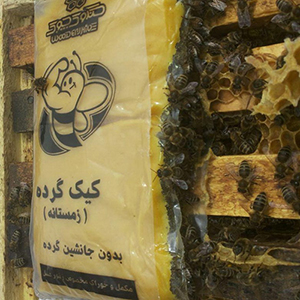
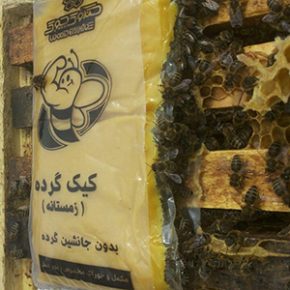
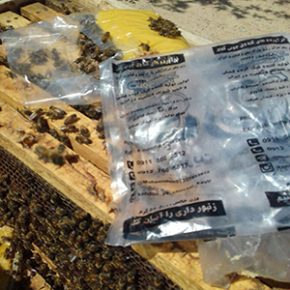
The following video is related to one of my hives, which shows the bees welcoming pollen cakes and wintry honey bee feed.
The final product
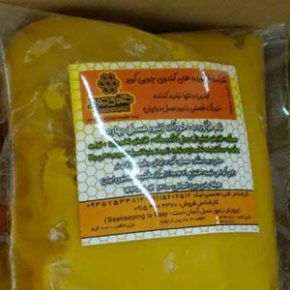
The Wooden Hive Company studied the effect of honey bee feed in winter in some target colonies for 2 years. Finally, the company’s final product for winter bees is named “Winter feed of honey bees”.
This product has been legally examined by the Iranian Intellectual Property Center. Also, the technical, scientific, and specialized expertise of the product in terms of innovation and novelty, innovative step, and industrial application has been done by the scientific-specialized working group of South Khorasan Science and Technology Park. Finally, the final formulation has been registered in the Iranian Intellectual Property Center under number 99461. Therefore, any copying is prosecuted.


Reviews
There are no reviews yet.