
Enriched honey with vitamins and minerals
Description about enriched honey
In this article, we want to examine the effect of feeding bee colonies by enriched honey with minerals, vitamins and trace elements in the production of the final product (honey). Also, examine its role in the treatment of patients who are deficient in minerals, trace elements and vitamins.
In humans, Calcium and Iron deficiencies are problems of global proportions. Women in particular can suffer severe mineral loss both postpartum and post menopause. Dietary supplements have their drawbacks, both in poor absorption and efficacy as well as adverse side effects. Bee products present a unique nutrient delivery system. Once bees have metabolized nutrients into honey, they become completely absorbable by our digestive system.
By supplementing the diet of the honeybees with the desired vitamins or minerals, we can create a more efficient and effective mineral supplement for people. This enriched honey is completely natural and entirely absorbed once consumed.
Building on three generations of beekeeping, Caspian Apiaries is an innovator in beehive management, colony manipulation and disease control. In this presentation we discuss the results of our attempts to design and produce honeys to alleviate common nutrient deficiencies in humans.
More information
We elaborate on the production of fruit honey, vegetable honey, vitamin honey, mineral honey and calcium honey. We also discuss our method of colony management, ensuring efficient nutrient throughput from raw ingredients to finished honey. We discuss three problems that have arisen when producing these types of honey, and explore several possible solutions.
The first problem arises when colonies use this extra food to supplement their brood, effectively storing less of the desired nutrients in the honey. The second problem is that honeybees cannot digest certain ingredients, especially fruits, in large amounts. The third problem we have encountered is an unpleasant flavor of certain supplemented honeys, such as those supplemented with vitamin B.
We discuss a technique we have developed to encourage the bees to consume more of these difficult ingredients, without negatively affecting the hive.
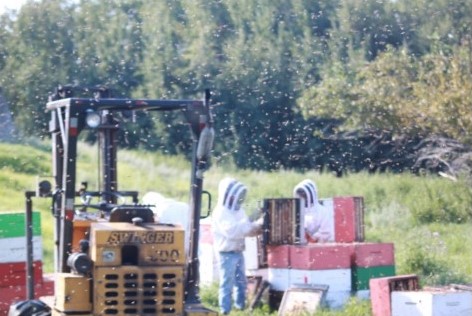
Introduction of enriched honey
Producing honey contain calcium & Iron requires a strong honeybee colon.
Causes of Iron, Calcium Deficiency:
- Calcium, iron and potassium are important nutritional elements of a balanced, healthy diet. Calcium is a mineral important in the development, growth and healing of bones.
- Iron is important in the function of red blood cells, the cells that carry oxygen throughout the body. Potassium is important for the proper functioning of muscles, nerves, and the heart. Deficiencies in any of these elements can cause serious health consequences.
- The majority of calcium in the body is stored in bone. The body moves calcium out of bone as needed to keep a steady level in the bloodstream.
- Common causes of calcium deficiency include decreased parathyroid hormone(the hormone in charge of maintaining normal calcium levels) and vitamin D deficiency.
About calcium and iron deficiencies
Calcium and iron deficiencies are common problems for majority of the population.
- Especially true for women who have recently given birth.
Calcium, iron, and potassium are important nutritional elements for a balanced, healthy diet.
- Calcium is a mineral important for the development, growth, and healing of bones.
- Iron is important for the function of red blood cells, the cells that carry oxygen throughout the body.
- Potassium is important for the proper functioning of muscles, nerves, and the heart.
Causes of calcium deficiencies
The majority of calcium in the body is stored in bones. The body moves calcium out of the bones, when needed, to keep a steady level in the bloodstream.
Common causes of calcium deficiency include:
– Decreased parathyroid hormone.
– Hormone in charge of maintaining normal calcium levels.
– Vitamin D deficiency.
About calcium and iron deficiencies
Many people take calcium and iron supplements to help restore nutrition.
However, consuming direct calcium and iron supplements are associated with a few problems:
– Many consumers experience pain while taking iron supplements.
– Pure calcium is difficult for the body to absorb.
Using bee products to reduce iron and calcium deficiencies
In 980 – June 1037 Avicenna (Ibn Sīnā ) was the first person to mix medication containing honey to administer to his patients.
- Honey is one of only products that is absorbed by our metabolism 100%.
- As a result of the ingredient contained in the honey will be absorbed 100% as well.
- The bees can be used to process these ingredients same as nectar or syrup.
- The body will absorb the ingredients contained in honey.
| Lab # | Description | Fe | Ca |
| 1173 | Honey Sample #1 (Fe, Ca mixed) | 19.69 | 245.60 |
| 1174 | Honey Sample #2 (Thyme) | 1.22 | 43.36 |
| 1175 | Honey Sample #3 (Thyme) | 0.65 | 43.74 |
| 1176 | Honey Sample #4 (High Elevation) | 1.03 | 33.18 |
| 1177 | Honey Sample #5 (High Elevation) | 1.06 | 28.77 |
As described in the chart above, by adding iron and calcium to bee feeding and allowing at least 3 days for bees to process the honey (honey sample #1), the levels of calcium and iron supplements in the honey increases by a significant amount compared to the other samples.
Using bees to produce iron and calcium honey (enriched honey )
The advantage of using bee products to attain these nutrients:
– Honey is completely absorbent by our digestive system.
– By adding calcium and iron into honey, which is then fed to and processed by the bees, it can be directly absorbed.
– There is no leftover residue that cannot be absorbed.
How to operate bee colonies to produce enriched honey with calcium and iron?
There are 2 different methods of production:
– Production during honey flow.
– Production after honey flow.
Ideal conditions
The ideal condition to reduce the brood production in strong colonies, but it is not practical in larger scale.
A strong operation is the solution for mass production.
During honey production
There is an opportunity to fill up the feeders with a mixture of calcium and iron (50% water & 50% honey)
– When bees store this mixture with nectar it will increase the level of calcium & iron.
– At the end of honey flow, honey can be extracted.
After honey flow
– This is the most efficient method of production because after honey flow, it is possible to get much more accurate dosages of calcium & iron in the honey.
– Consumption of this mixture will not take as much time.
How to mix iron and calcium with water?
It is difficult to mix Iron & Calcium with water. This process requires at least 20 minutes of mixing with room temperature water.
How to mix vitamin C & D?
Vitamin C is not difficult to be dissolved in water.
Vitamin D is much more difficult to dissolve in water and therefore it requires more time ( over 30 minutes).
To absorb Iron, our bodies require vitamin C and to absorb calcium our bodies require vitamin D.
It is important to add Vitamin C & D with the mixture of Calcium & Iron honey.
Adding vitamin C to the solutions, will create aggressive behavior within the bee colonies.
Adding other vitamins and minerals to calcium and iron honey
– We recommend adding Potassium to Iron & Calcium Honey.
– Since potassium is both an electrolyte and a mineral, it will help keep the water and electrolyte balance of the body.
– It also plays an important role in nerve & muscle function.
– Adding Vitamin B to Calcium and Iron Honey is not recommended because it will change the flavor of honey with makes it more difficult to consume.
– Unless it is necessary to help prevent certain conditions with vitamin B deficiencies in clients.
Allergies and side effects during consumption
Direct consumption of Iron has be known to create stomach pain and constipation.
–This method (using pills) will absorb only a low level of Iron in the body.
By consuming Iron Honey, there is no pain, no constipation, and it will be absorbed 100%.
Also consuming calcium, will reduce the deficiency.
Method and treatment
– The number of brood frames have to be reduced.
– The colony chosen has to be strong (more than 10 frame populations).
– After the last feedings, at least 3 days is needed for the bees to process the honey.
– Before extraction of honey, the moisture of the honey has to be measured 17%-20%.
Success Rate:
Majority of clients with calcium and iron deficiencies, who use this product, saw more than 70% improvements in less than a month.
The normal iron level for women ranges from 3-7g hemoglobin per deciliter of blood. The level of iron can increase up to 9-15g in four weeks consumption of Calcium and Iron honey.
No side-effects:
No signs of constipation or dry stool was reported.
Most iron supplements in the market cause constipation or dry stool.
Success Rate:
The normal iron level for women ranges from 3-7g haemoglobin per deciliter of blood. The level of iron can increase up to 9-15g in four week consumption of Calcium and Iron honey.
No side-effects:
No signs of constipation or dry stool was reported.
Most iron supplements in the market cause constipation or dry stool.
An article by Professor Hossein Yeganeh Rad
Prepared and translated by the team of Wooden hive Company
Any copying with mentioning the source is not prohibited.


Comments