
Bee venom
Further Details
What is bee venom?
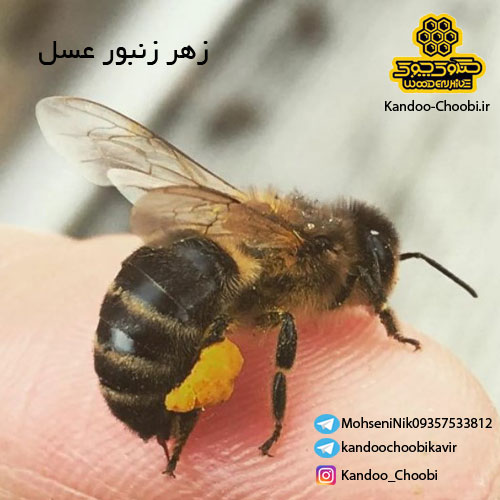
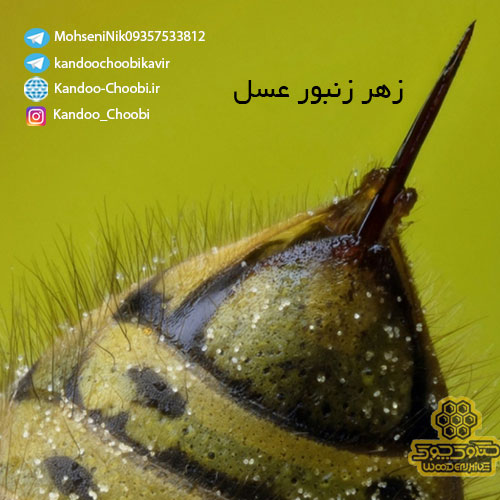
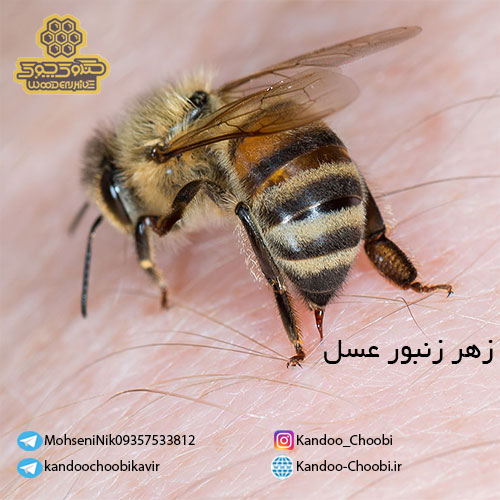
The bee venom, also known as apitoxin, is an acidic, colorless liquid. It dries quickly in the presence of air and loses 30 to 40% of its water due to drying. When bees feel threatened, they insert it into their target body with their bite.
Physical properties
The bee venom is a clear liquid with a pungent odor like honey and a very pungent taste and high solubility. This fluid, which is produced by the venom gland of the worker bee, has acidic properties (pH = 5.2).
This venom is very resistant to heat. For example, keeping it at 100 degrees for ten days does not change its properties. It is also resistant to cold. Because if frozen, it retains its properties for several years. But it is not resistant to moisture.
The bee venom compounds
This venom has complex compounds. Contains large amounts of biologically active compounds, enzymes, sugars, minerals and amino acids; Which has both inflammatory and anti-inflammatory effects. At least eight types of protein have been identified in it. The most important protein constituents are: melittin, phospholipase A, apamine and 5 other proteins;
Melittin, a compound containing 26 amino acids, accounts for about 50% of the dry weight of bee venom. It is also responsible for the pain caused by bee stings.
Phospholipase A, an enzyme and an allergen (allergen) is important and causes inflammation and damage. However, according to some research, this enzyme may have anti-inflammatory and immune protection properties.
This venom also contains the peptides apamin and adolapine. Both act like toxins and have anti-inflammatory and pain relieving properties. Other combinations include formic acid, hydraulic acid, phosphoric acid, histamine, klein, tryptophan, sulfur, calcium, copper, and some magnesium phosphate.
Tip:
As you can see, the components of bee venom have many positive and negative effects.
Important Note: While research suggests that some this venom compounds may have beneficial effects, the effects of each compound alone are still unknown. Because many of them have not been well studied.
How to collect bee venom?
To collect certain amounts of poison, for medical use or research work, an electrical device is used at the entrance of the condo. The device creates a mild electric shock, and the bees that sit on it react by biting a nylon sheet. The venom is thus precipitated and collected by a glass plate located under the nylon section.
Production of bee venom
The production of venom begins immediately after the birth of the worker bee and gradually increases with the age of the bee. When the worker bee reaches the age of about 16 to 19 days, its venom sac is completely filled and the secretion of venom stops. During this period, the amount of poison is about 0.05 to 3.3 mg or including 1313.1, its specific gravity is equal to 0.044 to 0.26 cubic millimeters.
The worker bee at this age is responsible for protecting the colony and has the maximum production of venom. The venom sac of worker bees fills up in the spring and summer, about 16 to 20 days after birth. But for autumn worker bees, this operation is done 4 to 5 days later. Worker bees are also able to produce and store venom in winter.
The bee venom harvest time
The best time for spring poisoning is when pollen and nectar are abundant in nature.
What factors determine the amount of poison produced?
The amount of venom produced by a worker bee is about 100 to 150 micrograms. This amount depends on factors such as age, race, season and pollen consumption. If pollen is removed from the bee’s diet, the production of venom will stop. It takes about a million stings to get one gram of dry venom.
Some benefits
In recent decades, bee venom has been widely used in the treatment of diseases and arthritis. Today, research is ongoing on the benefits of bee venom for people with rheumatoid arthritis and other ailments. In addition, recent research shows that some components of the venom are more effective than other serums in relieving allergies. Some studies have indicated that this type of poison has antiviral, antibacterial and anti-cancer effects. Some of the most important benefits of bee venom are:
– Anti-inflammatory
– Relieve rheumatoid arthritis
– Skin health
– Immune system health
– Treatment of neurological diseases
– Reducing pain
– Probably, fighting Lyme disease
– Treatment of cold shoulders
Reaction to bee stings
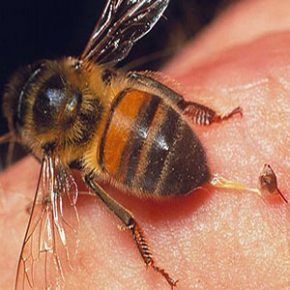
Bee venom prevents blood from clotting and dilates blood vessels, which lowers blood pressure. Some people experience pain and swelling only in the area of the bite in front of the bee sting. Some also have more severe reactions or very dangerous anaphylactic shock. In this type of shock, the bee sting causes the blood vessels to dilate rapidly, causing internal bleeding and lowering blood pressure.
Also, the tissues in the airway become swollen and block the airways. Bee and red bee stings can cause rapid and acute allergies if they enter sensitive areas of the body, such as the head, face, or especially the tongue. Anaphylactic shock can kill a person in just a few minutes. Therefore, sensitive people in case of a bite
Tip:
For topical reactions other than reducing itching, specific treatments can be given. Since the sting blades in bees are so thin and delicate and the gap created is so small, there is no cure to reduce the amount of venom. Unless you pull out the bite quickly.
The following are often used to reduce the pain and itching of bee stings:
Bee sting treatment kit, an ice pack or cold water, vinegar, rubbing raw onion on the bitten area, paste made from aspirin tablets, use of hemorrhoid cream, any kind of honey, wild henna flower juice, baking soda, ammonia, the layer thin of meat in the form of dough.
These treatments are best if used immediately after the bite. But if you have been bitten away from home or inside bee clothes, it is usually not possible to get them right away. Use calamine lotion or other insect bite products or ivy or hot water to reduce the redness that appears after a bite. If, after being bitten by a bee, seeds come out of your body or you have trouble breathing, you are probably allergic to bee venom.
Reviews
There are no reviews yet.