
pollen
Further Details
What is Pollen?
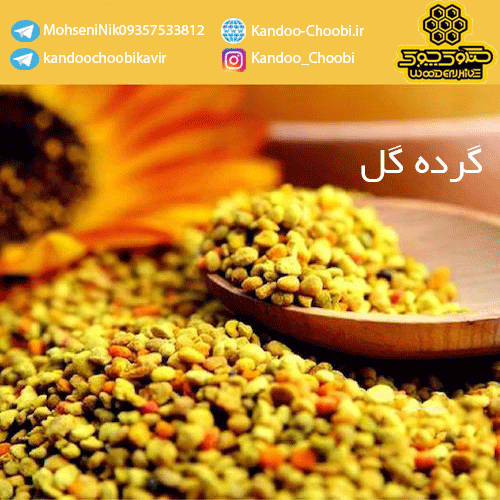
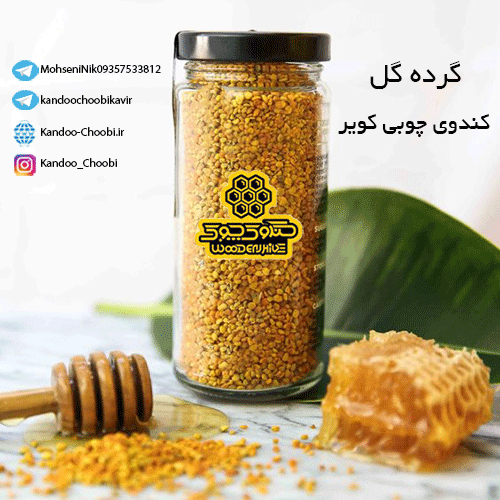
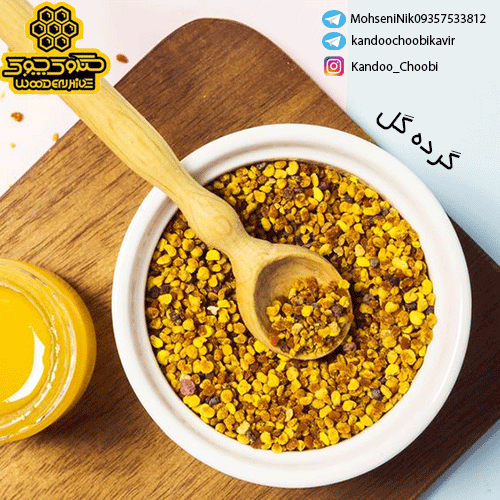
The pollen grains are the male organs of plants that must be transferred to female flowers for fertilization. This transmission is done by wind or insects. This substance that is transmitted by bees is prominent, prickly, and sticky. It is so small that it cannot be seen with the naked eye. Today, with powerful microscopes and new staining, they have seen its surface well and are faced with a world of wonders. The properties and shape of the pollen of each plant are specific to that plant and are very different from each other. This is the clue for complex research for pollenology, fossilology, petroleum, and the discovery of crimes.
Color reference books for this substance are available today. The bee is equipped with legs that have a pollen basket or special comb hair to collect it. He gradually brings small loads of pollen to the hive. Like meat, which is a protein food for us, humans, pollen is the only source of protein and vitamins for bees.
Note:
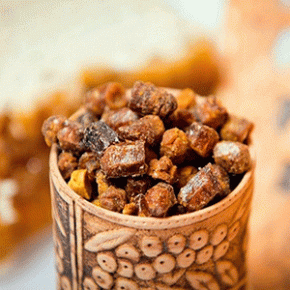
With the help of pollen traps that are installed on the door of hives, humans separate these small cargoes from their feet and clean, dry, store, and pack them in various forms for their use.
Pollen grains
These grains are rich in vitamins, proteins, and minerals. Research by scientists and people’s experiences has revealed the secrets of the nutritional benefits and properties of pollen. The primitive Arabs used this product to physically strengthen humans and increase the strength of horses and camels.
Prostate health and the presence of sex hormones in pollen have been proven. Increasing the life expectancy of beekeepers is another secret associated with this substance. Today, with advanced techniques and equipment, they have produced tablets, capsules, ampoules, essential oils, chocolates, cakes, etc. with extraction devices.
Properties and compounds
Bee pollen is a rich source of vitamins, minerals, and amino acids. In addition, the attributes of pollen and the vital substances contained in it are very valuable, which remain in honey for years. Some of the vitamins and combinations in this product are as follows:
Protein:
The range of changes in pollen protein content is between 7 to 35%. With more than 1000 different types of enzymes, they strengthen or accelerate the body’s biochemical processes. Proteins are made up of amino acids. They are nitrogenous chemical compounds that are formed by the breakdown of proteins.
Pollen contains 35% of nitrogenous chemical combinations. 15% of them are amino acids that are essential for survival. No plant or living thing in nature is as rich in protein as pollen.
Essential amino acids of pollen:
Cystine is the main constituent of creatine and hair. 15% histidine causes red blood cells to form. Tryptophan is 1.60%, a substance that is essential for life. Methionine 1.7%, this amino acid regulates blood sugar and fat exchange. Strengthens liver cells and prevents poisoning. 5.70% lysine is effective in cell growth and speeds wound healing. Glutamic acid 9.10% improves the absorption of nerve cells and brain cells exchanges. It also has a great anti-poisoning effect.
Carbohydrates:
Carbohydrates make up between 19.9 to 36.6% of the chemical composition of this product. As we all know, sugar, starch, and nitrogen-free organic compounds, along with fats and proteins, make organic food for humans and animals.
Fats:
Fats make up between 2 and 14.4% of the chemical compositions of pollen. The various fats in this substance are unsaturated, and most of these fats can reduce blood cholesterol.

Vitamins:
The average amount of vitamins in pollen reaches one-thousandth of a milligram. In general, vitamins, except vitamin D, are elements that must enter the body as part of the food. They have no role in receiving energy and only act as a catalyst. A catalyst is an element that, without any modification, causes or does not form a compound.
Vitamin A
If the body is deficient in vitamins, then is made severe disorders in the process of human life. Vitamin A, this vitamin is present in the amount of 6000 micrograms per 100 grams of pollen and is in the form of carotene, which is the pre-stage of vitamin A. This vitamin is essential for the growth and protection of the skin and eyes. Its deficiency causes night blindness and impaired nail and hair growth. It also regulates blood pressure.
The vitamins of Group B
Vitamin B1 or Thiamin
This vitamin is present in the amount of 9.2 micrograms per 100 grams of pollen. The central nervous system protects from pain and has a soothing effect on it. Regulates blood sugar exchange by the metabolism of carbohydrates.
Vitamin B1 riboflavin
It is present in the amount of 18.5 micrograms per 100 grams of pollen. It is a growth factor and has a positive effect on skin disorders, mucous membranes, and fatigue. The daily requirement is three milligrams, which is found in 200 grams of pollen.
Vitamin B Folic acid (Fols)
This vitamin is present in the amount of 5 micrograms per 100 grams of pollen, which has a positive effect on the growth and production of red blood cells.
Vitamin B Pantothenic acid
This vitamin is present in the amount of 50 micrograms per 100 grams of pollen and is found in every living cell. Its deficiency reduces the resistance to diseases and its daily requirement is 5-10 mg, which is found in 100 to 350 grams of this grain.
Vitamin B6 or Pyrrodexin
This vitamin is present in the amount of 5 micrograms per 100 grams of pollen. It promotes growth and helps to cure diseases related to the arteries of the heart. Its deficiency causes hair loss and damage to the nervous system. The daily requirement is 1.5 to 2 mg, which is contained in 300 to 400 grams of this grain.
Vitamin B12
This vitamin is only present in small amounts of this grain.
Vitamin C or ascorbic acid
This vitamin is present in the amount of 7000 micrograms per 100 grams of pollen. It is a vitamin with many effects such as strengthening cell exchanges, relieving fatigue, treating allergies, hemorrhoids and gum illnesses.
The properties of pollen, despite this vitamin, strengthen the body’s resistance to disease and have a very good effect on the heart. The daily requirement of this vitamin is provided by approximately 500 grams of this grain.
Vitamin D
It causes the growth of bones that are found in egg yolks and fish liver.
Vitamin E Tocopherol
This vitamin is present in small amounts in pollen and has fertilizing (reproductive) effects. Diseases caused by the contamination of materials (fossil fuels) are also reduced by this vitamin.
Vitamin H Biotin
6.8 mg of this vitamin can be made by intestinal bacteria. Deficiency often occurs after long-term use of antibiotics. Vitamin P routine, flavonoids prevent skin bleeding and have positive effects on capillaries.
Minerals:
Mineral salts and minerals in pollen are between 3-7%; These include gallium, calcium, magnesium, phosphorus, sulfur, copper, iron, and chlorine.
Hormones: Hitamins
Tissue hormone that causes blood vessels to enlarge and alters the elasticity of cell tissue. Estrogen affects cell growth and cellular metabolism.
Essential oils: include peppermint oil, thyme oil, thistle oil, and…
Antibiotic materials:
These materials are especially present in the pollen obtained from the frame.
Of course, there may still be a small but very effective percentage of unknown substances in pollen.
For about 50 years, many scientists have studied this grain; Many chemists have analyzed food in pollen. Doctors, especially those who are researching aging, have discovered substances with healing properties in pollen.
is not comparable to common human foods; Because other than being a rich source of protein. It contains carbohydrates, fats, minerals, and vitamins and has all the necessary ingredients for a complete diet; And it has 5 or 6 times more amino acids than lean meat.
Pollen, like royal jelly, is a complete food with many properties. This issue has been very important for human beings; Because the body needs a complete diet for its activities and survival (the concept of health). Medicinal plant pollen should also be considered; Because through it, the medicinal properties of plants are transmitted to humans without change.
How to use pollen?
Consumption of 15 grams of this grain every morning (equivalent to 60 calories) with 6 ounces of mineral water or fruit juice is a good combination for breakfast. Sometimes pollen is eaten at lunch with some yogurt, jelly, and salad. In the evening it should be consumed one hour before dinner.
For information on the price, order, and purchase of pollen, please contact us.
Contact numbers: +989153004370, +989115602512
Reviews
There are no reviews yet.