
varroa mite disease in bees
What is varroa mite?
Sadly, the damage caused by varroa mite [varroa jacobsoni] is well known to many beekeepers. The history of the spread of this parasite and how this mite reproduces have been researched and this information offers some help in dealing with the pest.
The varroa mite is one of the most important pests in beekeeping, which is very important to identify and control. The female is found on adult bees and pupae and the male on pupae. It hatches 0.5 mm from the white eggs. After three days, it turns into an elliptical white pupa. The male and female pupae mate inside a closed cell, after which the males die and the females leave the cell.
The Spread of varroa mite
There is not complete agreement on how the varroa mite spread from place to place, but it is clear that the mite was found exclusively in Java, Indonesia at the beginning of the last century (Oudemans 1904). It is reported that Javanese bees were resistant to the varroa mite.
Throughout the fifties and early sixties varroa mites spread to most of the other countries in that region, but a critical event appears to be a large movement of native Javanese bees to Japan in 1965. The relocation of the parasite to Japan is important because Japanese colonies were moved to Paraguay in 1971 and it seems that this movement was responsible for the eventual infestation of most colonies in South and North America.
A single varroa mite was found in Maryland in 1979, but a larger scale invasion was confirmed when large numbers of mites were found in Wisconsin and Florida in 1987. Now, with the exception of some isolated Canadian locations, it appears that varroa mites are everywhere in the world.
Introduction of varroa mite
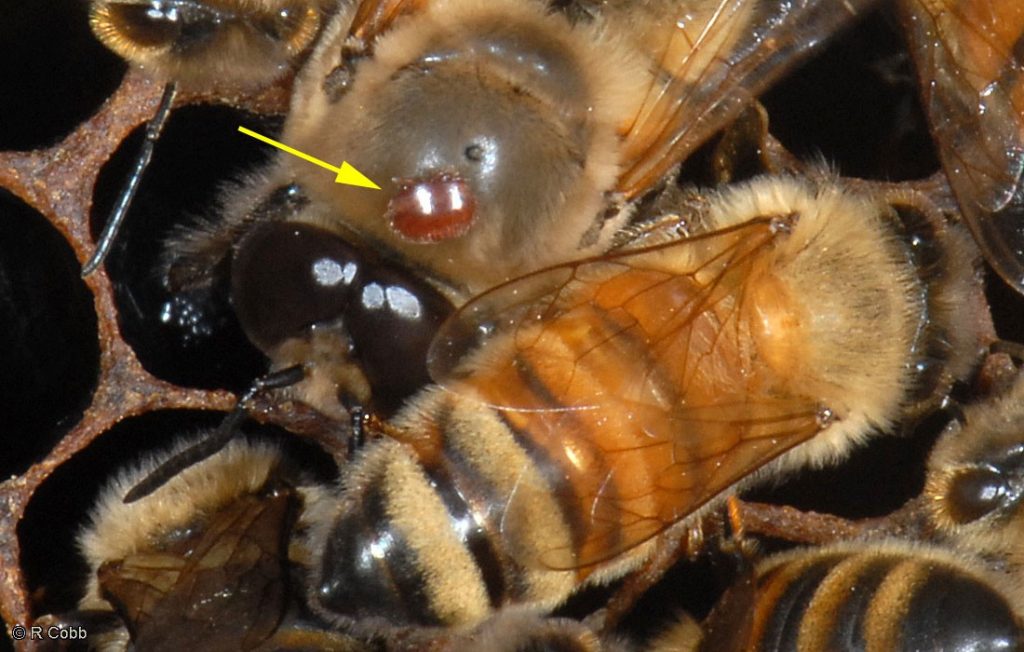
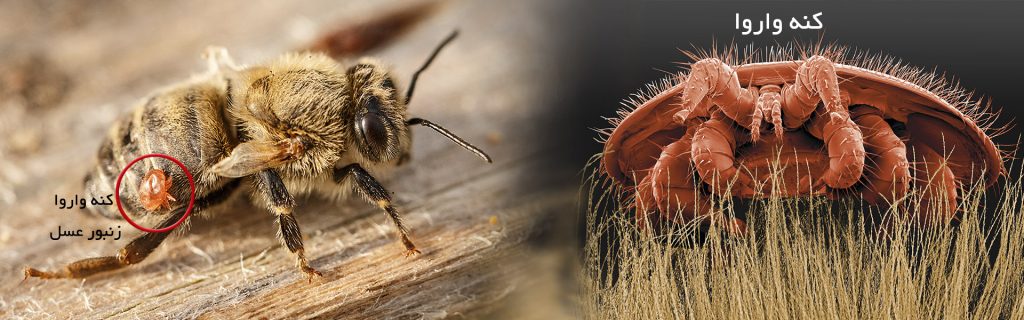
Adult female mites are brown to dark brown or dark red, shaped like a crab, measuring 1 to 1.8 millimeters long and 1.5 to 2 millimeters wide. Their curved bodies fit into abdominal folds of the adult bee and are held there by the shape and arrangement of ventral setae. This protects them from the bee’s normal cleaning habits.
Adult males are yellowish with lightly tanned legs and spherical body shape measuring 0.75 to 1 millimeter long and 0.7 to 0.9 millimeters wide. Mature adults have eight legs (four on each side). If the mite is not mature it is smaller, lighter in color and may be seen to have only six legs (three on each side). Other pollinators can spread varroa mites, but they can only reproduce in the brood cells of honeybees.
The cause of varroa mites
Male flight and entry into other colonies, looting, brooding, colony escape, entering nectar bees other colonies, parasite transmission by other insects, transfer of hives to infected areas, keeping a colony in one area, moving bodies with bees in time making honey, selling hives and the queen trade are some of the causes of this mite.
Symptoms of varroa mites in the hive
Because the mite lives and reproduces secretly in the hive, it cannot be easily detected in the early years. On the other hand, the average increase in mite generation is 10 to 15 per year. After the third year of infection, the number of mites increases and the damage is visible. Symptoms of varroa mites in the hive include:
1- Most worker bees are restless and walk fast and flutter their wings for no reason. If a mite settles on the wing joint, the bee loses its ability to fly.
2- Due to feeding on the blood of bees, mites cause abnormal death of bees.
3- Sometimes the larvae leave the cell and fall to the floor of the hive.
4 – Bees inside the hive are often defective and have an abnormal shape.
5. Due to the weakening and decreasing power of flight and mating of male bees, often incomplete or unpaired queens are observed in the hive.
The varroa mite Reproduction – Worker Cells
Each mated female varroa mite will enter the worker cells during days 7, 8 or 9, she will lay her first egg sixty hours after the capping of the cell. The first egg can be male or female. The second egg is laid 30 hours after the first and it is normally male.
The mite will lay up to five eggs, each of the last three eggs will normally be female and they will also be laid at 30-hour intervals. The male eggs will hatch after 5.5 days and the female eggs will hatch after 7.5 days. If time permits the mites will mature and mate in the capped cells, virgin females will be lighter in color, the normal red / brown color develops once the female is ready to lay eggs.
The workers normally emerge after 21 days and this means that only one of the female varroa will have an opportunity to mate in the cells. In the case of the bees in Java some of their resistance can be traced to the accelerated emergence of the bees. The Javanese strains emerged after 19 days giving the varroa mites no time to mate.
The Caspian Solution for varroa mite
Caspian Solution offers this same type of emergence advantage to any type of bees. When a colony is treated with Caspian Solution the workers will emerge after 18.5 days, therefore, the varroa mite’s opportunity to mate and increase their population is reduced. This is not a treatment only a method to prevent rapid population increase. Mites must be treated with medication.
Varroa mite reproduction – Drone Cells
The mated female varroa enters the drone cells in the 8 to 10 day period; this later entry is due the slower maturing process of the drone larvae. The mites prefer the drone cells to the worker cells because of the stronger pheromone signal from the male larvae.
The varroa mite egg laying and timing in the drone cells and worker cells are the same, but because the drone larvae take longer to mature and emerge (24 days compared to 21 days for worker cells) two generations of the new varroa can mate in the cells.
Caspian Solution can reduce the average emergence time from 24 days to 22 days and this restricts but does not eliminate the mating of the second generation of mites. Once again to eliminate mite medication must be used.
Curing varroa mites
The best way to fight varroa mite is organic and non-chemical methods. Such as the use of oxalic acid, formic acid and Thymol Marvel and the best time to fight it is in the fall and after spawning. After getting honeying, formic acid is used once or twice to fight varroa. In the fall, if re-infection occurs, a fight against oxalic acid is carried out and usually no fight is needed until a year later.
An article by Professor Hossein Yeganeh Rad
Prepared and translated by the team of Wooden hive Company
Any copying with mentioning the source is not prohibited.


Comments