
Vitamin C for bees
Further Details
Vitamin C for bees
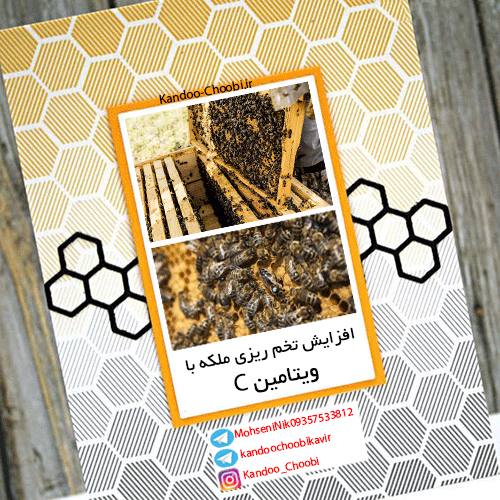
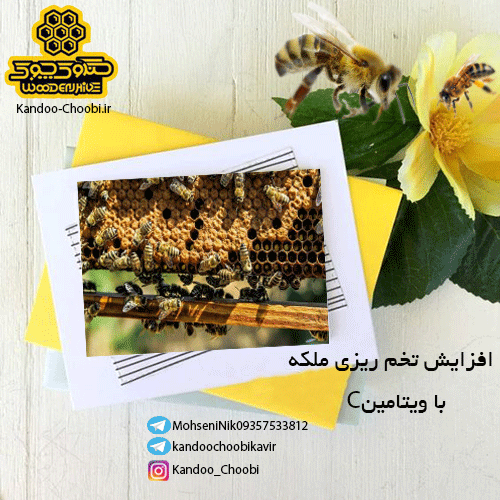
Vitamins, especially vitamin C for bees is an important issue in their nutrition. Which are essential for the normal development of the baby and increase the queen’s spawning. Bees, like all other animals, need vitamins that should be in balance with other nutrients, especially proteins. Lack of these substances in nutrition leads to a variety of disorders and diseases. Most coenzymes have a vitamin as part of their structure that is undoubtedly responsible for creating an essential role for vitamins.
In general, various vitamins have been identified in pollen grains, the lack of which in bee diets causes various illnesses. Pollen grains are high in vitamins, especially water-soluble vitamins, and vitamin C is abundant in fresh pollen grains.
Use of vitamin C for bees
In this way, nectar and pollen play an important role as the “original” source of vitamins in bee nutrition. The scarcity of pollen-producing and nectar-producing flowers due to climatic conditions leads to reduced population growth and the longevity of bees. For this reason, feeding bees on honey with vitamin supplements is one of the methods used to prevent the damage caused by nectar and pollen deficiency.
In general, some characteristics of the queen bee, such as spawning, in addition to the length of day and weather conditions, depend on the amount of nectar and especially the amount of pollen that worker bees bring into the hive. Therefore, the reduction of nectar and pollen has a direct negative effect on the queen and leads to a decrease in the queen’s spawning. In such a situation, the beekeeper’s greatest task is to deal with the decline of the queen’s spawning activity. This is only possible through complementary feeding of bees.
More information
Vitamins are essential for the growth and health of bees. When they feed on their natural food like nectar and pollen, they are not deficient in the supply of vitamins due to the freshness and variety of nectar and pollen. But when it comes to supplemental feeding, and beekeepers use substances such as white sugar and pollen substitutes to feed, they have a lot of problems with vitamins. Therefore, vitamins especially vitamin c for bees seem necessary.
Benefits and properties of vitamin c
Vitamin C has antioxidant properties. Many researchers believe that vitamin supplements (A, E, C) diminish free radicals. In this way, they reduce diseases and increase life expectancy in organisms. Vitamin C and other water-soluble vitamins are more abundant in pollen than fat-soluble vitamins, But their amount varies greatly depending on the collection season.
Researchers have concluded in a study that this vitamin is not essential for the development of infants, But taking vitamin C for bees increases baby rearing. According to researchers, vitamin C promotes the development of mammary glands, enhances the activity of grazing bees and honey production.
The results of various studies show that adding 2 grams of vitamin C to the spring and autumn feeding syrup of the colonies increases the queen’s spawning and thus the population.
Researches on the benefits of using vitamin C for bees
A 1973 study found that manually increasing vitamin C in the diets of insects that use plant sources is essential. Because the presence of this vitamin is necessary for larval rearing. Due to the oxidation of vitamin C in pollen stored at high hive temperatures, and its inaccessibility, fresh pollen must be provided to the hive Or must add vitamin C manually to their supplements.
Increasing different levels of vitamin C, especially at the level of 3000 ppm to spring feeding (sugar syrup one by one) of the colonies from early March to late April, accelerates and increases the growth of the baby and population growth. The researchers evaluated the effect of complementary feeding (K, E, C, B A) on larval acceptance and queen quality. The results showed that complementary feeding augmented the acceptance of transplanted larvae; Also, the length and volume of the queen cell are affected by complementary feeds.
The results of other studies on the effect of vitamin C nutrition indicated that the average bee mortality rate in winter in vitamin C colonies was about 33% lower than in control colonies. In addition, feeding with vitamin C for bees in winter augmented the concentration of glycogen and trehalose in the early stages of production of worker infants and bees.
Applications of vitamin C for bees
– Increasing queen spawning
– enhancement the strength of the immune system
– Reducing stress
– Assisting in the process of pollen protein absorption
– augmenting secretion of royal jelly
– Increasing the speed of maturity and flight ability of male bees
– Encourage the Virgin Queen to fly to the wedding
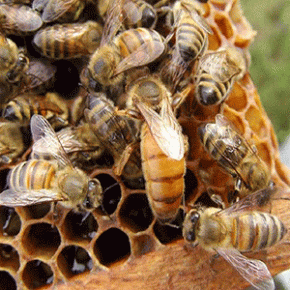
The following figure clearly shows the experience of our company team in using vitamin C for bees and its effect:

Contact us to order and buy: +989153004370, +989115602512
pardis –
عالی و کاربردی
pardis –
عالی و کاربردی خیلی ممنون
admin-kandoo –
خواهش می کنم.
موفق باشید