
Bee feed with flag extract and saffron pollen
Further Details
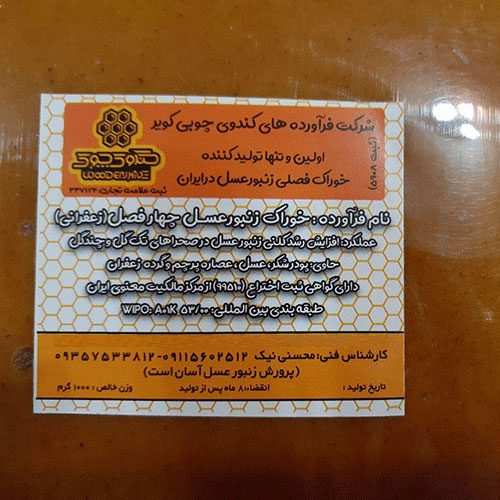
The bee feed with saffron pollen
(Saffron pollen has the highest biological value for bees among all pollen in nature. While beekeepers refrain from migrating to saffron farms due to the loss of grazing bees !!! While this can be Used as valuable pollen for bee feed); For more information about bee feed with saffron pollen, be with us…
The biological value of different pollen for bees
All organisms need carbohydrates and protein to survive and reproduce. Bees also use plant nectar for energy and plant pollen for protein. Pollen contains the male cells of plants, which contain fats, proteins, carbohydrates, minerals, and beneficial antioxidants for bees and bee feed ingredients.
The above compounds are various in the pollen of different plants. Wind-pollinated plants (dates and corn) have very low nutritional value. Date pollen and corn have less than 5% fat and protein between 10 and 13%. Pollen from plants pollinated by bees has a higher nutritional value: (like all fruit trees (almond, apricot, apple), all forest trees (linden, maple, burdock) and some herbaceous plants one to several years old (rapeseed), sunflower, thyme, lavender, saffron, etc.); the pollen fat of these plants is from 9 to 20% and their protein is from 7 to 30%.
Pollen from fruit trees and plants that have a low-fat content and a high protein content is very valuable to bees and are of particular importance in the beekeeping industry. Pollen of most fruit trees has a fat content of less than 15% and a protein content of less than 35%; Dark pollen such as rapeseed, turnip, nightshade have a fat content of more than 15% and protein less than 30%.
Note:
(Among all pollen in nature, only burdock pollen and saffron pollen have the lowest fat content (15%) and the highest protein content (50%). The pollen of these two plants have the highest biological value for bees and bee food).
Burdock plant
A burdock is a group of trees or ornamental shrubs of the willow genus whose spikes (have a fragrant essential oil) are formed at the beginning of spring.
Salix Capri (scientifically named Salix aegyptiaca) is one of its species that has pale yellow flowers and Cat-tail. The height of the tree reaches 9 meters. The essential oil of this plant is called burdock sweat, which is used to flavor syrups. It also has high healing properties in traditional medicine. Burdock branches are also used to decorate the Haftsin tablecloth.
Saffron plant
Saffron is a small perennial plant with a height of 10 to 30 cm. From the middle of the onion or the base of the stem, some narrow and long leaves emerge. From the middle of the leaves, a flowering stem emerges that leads to one to three flowers. The flowers have 6 purple petals that may be pink or purple in some varieties. The flowers have 3 flags and a female leading to a reddish-orange stigma. The part used by this plant is the end of the cream and the stigma of the three branches, which is known as saffron, which is fragrant and slightly bitter. In this product we produced bee feed with saffron pollen.
Comparison of the biological value of saffron pollen to burdock and other plants for bees
Saffron flowers contain mineral compounds, trace elements, vitamins group of B, vitamin C and chemical combinations of natural essential oils such as “crocin”, “anthocyanin”, “carotene”, “lycopene”, “zeaxanthin” and phenolic compounds). Which are also found in saffron flags and pollen. It should be noted that these combinations are not found in the flag and pollen of other plants.
On the other hand, in most plants, the male part of the plant consists of rods and anthers. The pollen sac is located in the anthers of the flower, which contains pollen grains, and the anthers are at the end of the flower flag; While in the saffron plant, the whole flag contains pollen grains. In this regard, the amount of flag pollen of saffron is much more than the amount of flag pollen of other plants.
There are also compounds in saffron flowers such as (“crocin”, “anthocyanin”, “carotene”, “lycopene”, “zeaxanthin”) that also are in the saffron flag which are not found in other plants. These combinations are very useful for bees and bee feed production.
(The composition of fats, sugars and natural enzymes, and antioxidants of saffron pollen is much richer and more valuable than all plants.)
The technical problem of establishing bee colonies in saffron fields
The flag and pollen compounds of the saffron are toxic to bees at high altitudes and in the early morning before full sunrise and direct sunlight due to a sharp drop in temperature. The reason is the presence of a substance called safranal and terpene and oxygenated substances that are present in saffron flowers. These substances penetrate the flag and pollen in the early morning and cause poisoning for bees; But with the rising of the sun and direct radiation and warming of the air, this problem is solved and safranal and terpene, and oxygenated substances are removed from the head and flag.
Unfortunately, saffron flowers are collected by farmers in the early morning before direct sunlight and warming; Therefore, bees are not able to access this valuable plant during the hot hours of the day; For this reason, many beekeepers refuse to take the hives to the saffron farm.
Providing a technical solution to the existing technical problem
Investigation of differences in flower structure of saffron and other plants:
In most plants, the male part of the plant consists of rods and anthers. The pollen sac is located in the anther part of the flower, which contains pollen grains. And the anther is at the end of the flower flag; While in the saffron plant, the whole flag contains pollen grains. In this regard, the amount of saffron flag pollen is much more than the amount of flag pollen of other plants.
In the saffron plant, the whole part of the flower flag contains useful compounds for bees that are easily collected; While in other plants such as burdock, these compounds are present only in the upper part of the flag and its collection is impossible; In this regard, collecting saffron flag is economical.
Collecting saffron flags and getting extract
Saffron flowers are collected in the early morning and the head and flag are separated. The flags are separately exposed to direct sunlight for a while. Sunlight removes the safranal compound in the flag and saffron pollen grains. Then flags and pollen are then stored in the refrigerator to preserve protein and micronutrients. Finally, flag extract and saffron pollen are extracted to produce the final product and are used in the production of bee feed with saffron pollen..
Final product
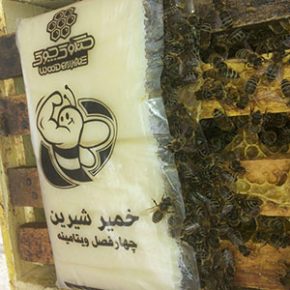
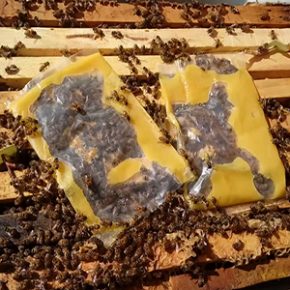
The Wooden Hive Company studied the effect of flag extract and saffron pollen in some target colonies for 3 years. Finally, the final product of this company, which is suitable for four seasons of the year, has been named as “four-season bee feed enriched with flag extract and saffron pollen”.
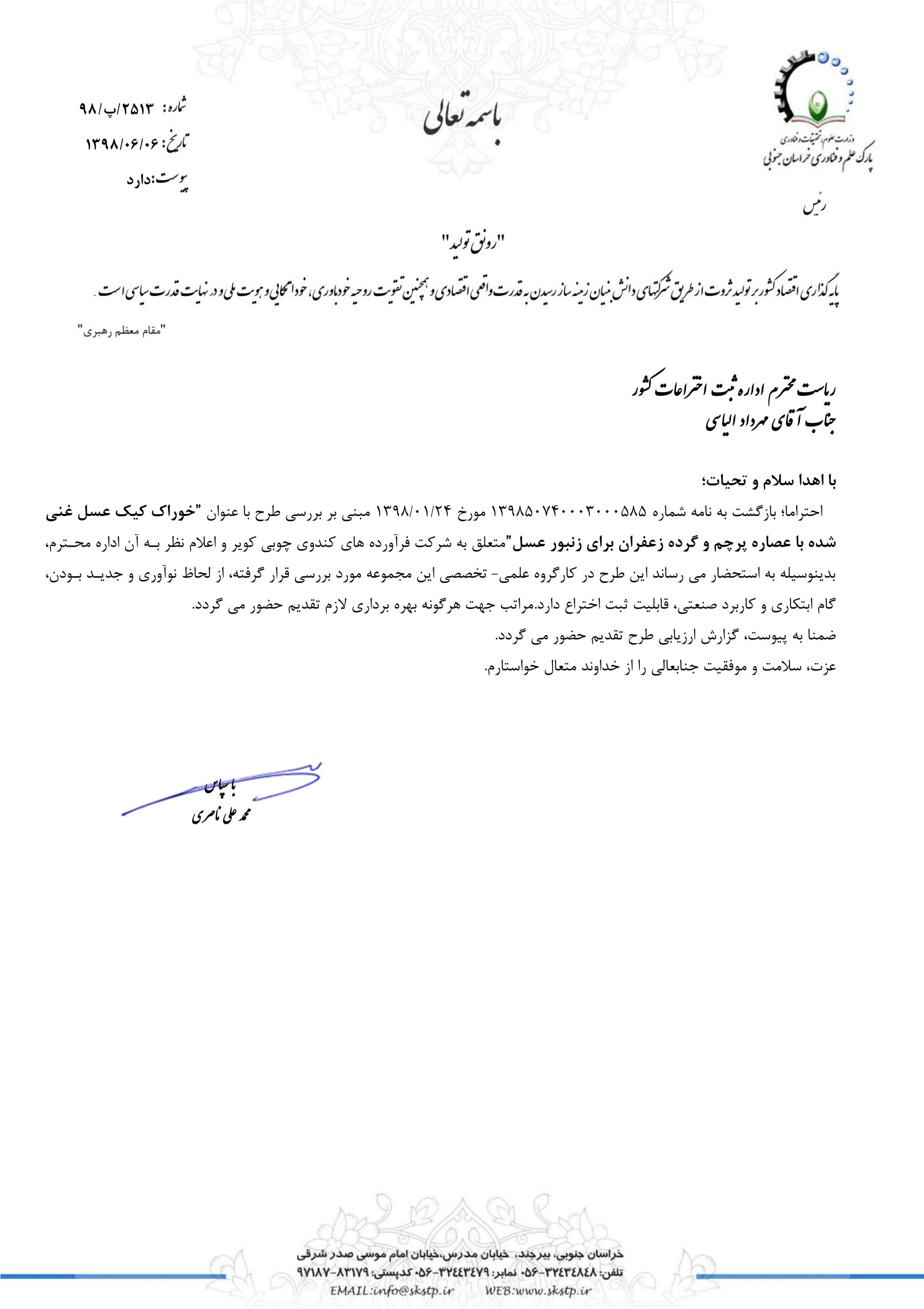
The product of bee feed with saffron pollen has been legally examined by the Iranian Intellectual Property Center. Also, the technical, scientific, and specialized expertise of the product in terms of innovation and novelty, innovative step, and industrial application have been done by the scientific-specialized working group of South Khorasan Science and Technology Park. Finally, the final formulation has been registered in the Iranian Intellectual Property Center under number 99510. Therefore, any copying without resource is prosecuted.
To order and buy all kinds of bee feed and any advice in this field, you can call +989115602512 and +989153004370.
Copying the content by mentioning the source is not prohibited. Otherwise, any copying will be prosecuted.

Reviews
There are no reviews yet.